
Did you know a paint bubble can appear several floors below the leak that caused it?
A tenant sends a photo of a bulge in the paint. For a manager overseeing hundreds of apartments, it is a familiar kind of maintenance call: find the source, understand what got wet, and get the space back in order.
Water does not always take the shortest route to a visible surface. It can run along pipes and framing or through wall cavities before collecting behind the finish. The apartment with the bubble may be where the water arrived, rather than where it began.
That is why the photo is a useful starting point. It helps locate the symptom; an on-site assessment establishes the repair.
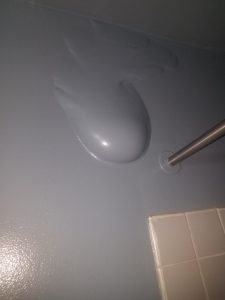
The leak is fixed. Is the repair finished?
Stopping the source is essential. Prompt attention to the moisture and affected materials completes the job—helping limit repeat visits and giving residents a clear path back to normal.
A LITTLE BUILDING SCIENCE
What is the paint holding?
Paint dries into a thin film bonded to the surface beneath it. When moisture weakens that bond, water can collect in the gap and push the film outward. If the coating holds together, it can stretch into a pocket; gravity draws the collected water downward.
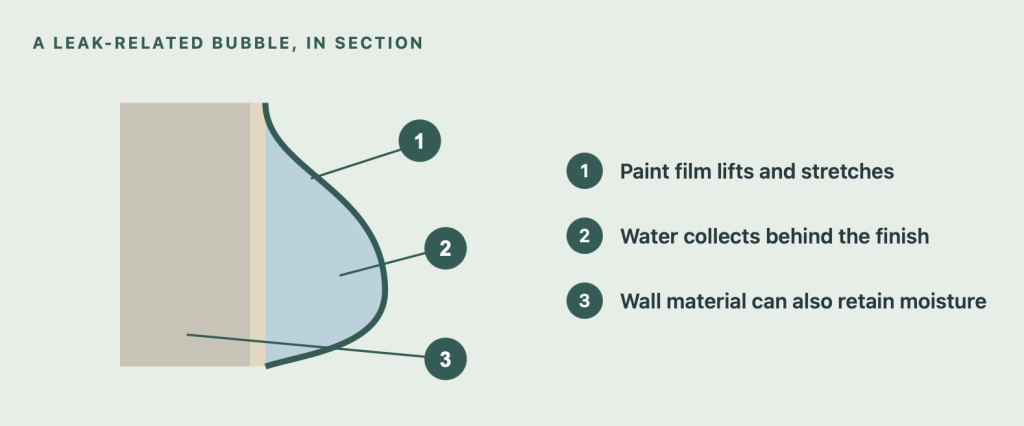
The source matters more than the appearance.
A similar-looking pocket may hold water with very different origins. Clean, gray, and black water describe contamination conditions, not a reliable visual color test.
Clean water: Water from a sanitary source, such as a supply line. Contact with contaminated materials or stagnation can change its condition.
Gray water: Water containing significant contamination. Its source and what it has contacted guide the cleanup.
Black water: Heavily contaminated water, including sewage. It calls for specialist handling and an appropriate cleanup plan.
Before anyone opens it: assess the source and prepare to contain the release. An unplanned puncture can splash water onto people and belongings. Leave opening and cleanup to a prepared team.
PROMPT ATTENTION. THOUGHTFUL REPAIR.
A familiar issue, handled well.
A bubble does not, by itself, mean mold or sewage is present. It does mean moisture deserves attention. Persistent dampness can support mold growth, while contaminated water may leave residues that need proper cleanup. Addressing those conditions helps protect the materials and the people using the space.
Start promptly. Finish when the materials are ready.
EPA advises drying wet materials within 24–48 hours of a leak or spill to help prevent mold. That is a prevention guideline, not a countdown to guaranteed mold growth. The clock starts when materials get wet, not when the leak is repaired.
Match the repair to what is actually there.
Assessment and safe moisture control should begin promptly, alongside stopping an active leak. Once the source is resolved, remaining drying and cleanup should move forward without unnecessary delay. Repainting comes after the affected area is clean, dry, and ready.
For clean-water damage, sound sheetrock with intact seams may be dried and retained. Swollen or compromised board may need replacing. The water source, depth of damage, and any contamination determine whether this is a surface repair or a more involved restoration.
For a manager, a useful update is straightforward: what caused the leak, what needs attention, and when the next visit is expected. Clear facts and realistic timing help residents understand the work.
Vista knows the work behind the finish.
At Vista Renovations, we bring hands-on experience to NYC leak-related repairs, from small plumbing work to sheetrock replacement and the finished surface. Led by Danielle, our woman-owned small business combines family values with professionalism, integrity, and care for the homes people live in.
Managing a building in NYC? Tell Vista about the repair you need.

Leave A Comment